Every May, enforcement officers across North America dedicate 72 hours to one thing: finding the cracks in your operation. CVSA's International Roadcheck is the industry's most concentrated inspection event, and if your fleet is not ready, those three days can cost you far more than a citation.
But here is the truth that experienced safety managers already know: fleets that struggle during Roadcheck are not struggling because of Roadcheck. They are struggling because of what has been building up for weeks — deferred maintenance, incomplete records, undertrained drivers. Roadcheck just puts a spotlight on it.
The good news? A proactive approach turns this event from a threat into a confidence check.
What Roadcheck Is — and What It Actually Tests
CVSA's International Roadcheck runs for 72 hours, typically in May, with certified inspectors conducting Level I, II, and III inspections at roadside locations across the U.S., Canada, and Mexico.
Level I (North American Standard Inspection) is the full exam — a complete review of the vehicle's mechanical condition plus driver credentials, Hours of Service records, and documentation. This is the inspection that stops trucks and parks drivers.
Level II (Walk-Around Inspection) covers driver documents and a visual vehicle review without a full under-vehicle check.
Level III (Driver/Credential Inspection) focuses entirely on the driver — license, medical certificate, HOS logs, and seatbelt use.
Any violation serious enough to endanger safety results in an out-of-service (OOS) order — meaning that truck or that driver does not move until the problem is fixed. In 2025, CVSA inspectors conducted 56,178 inspections and placed 18.1% of vehicles and 5.9% of drivers out of service.[1]
This Year's Focus: Cargo Securement and ELD Integrity
Each year, CVSA spotlights a specific area that inspectors will scrutinize beyond the standard checklist. This year, the spotlight falls on two areas that matter deeply to fleet safety and liability exposure — and both are easiest to manage when you treat them like measurable programs, not “common sense reminders.”
Cargo Securement (make it auditable)
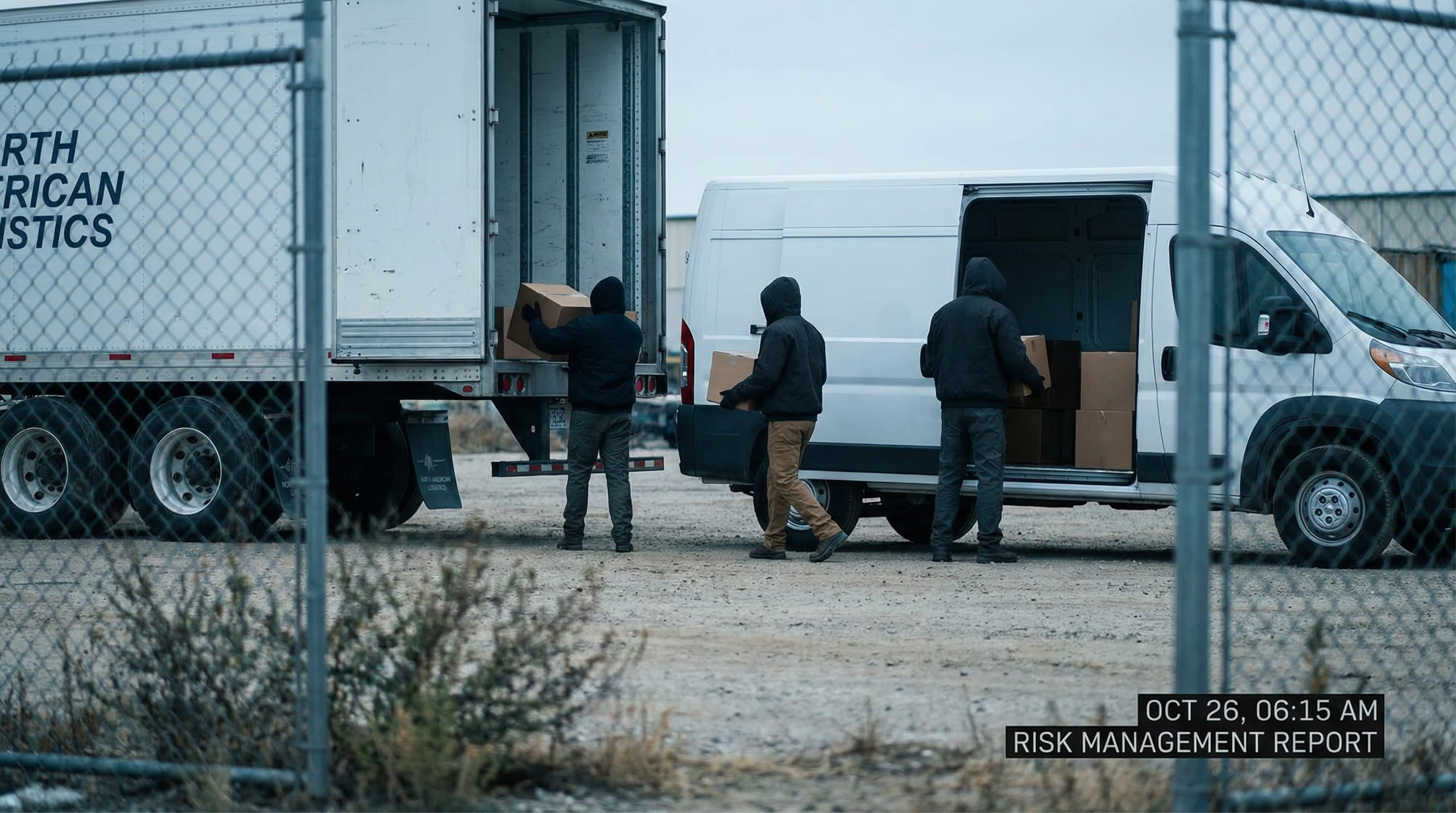
Improperly secured loads are not just a citation risk — they are a crash risk, a nuclear verdict risk, and a public safety issue. The operational fix is consistency: the same freight types secured the same way, every time, with proof you can point to.
Inspectors will still look for the basics (no leaking/spilling/blow-off, no shifting that impacts stability, proper front-end structures/tie-downs, and all dunnage/equipment secured). But your best defense is to build a securement audit cadence.
Fleet manager action: Run a “3-trailer audit” twice a week leading into Roadcheck. Pick three random loads, score them with a simple pass/fail checklist, and track the results. If a pattern shows up (same lane, same shipper, same driver group, same trailer type), fix that root cause and re-audit within 72 hours.
ELD Integrity + HOS Reporting (prove the story matches the data)
Inspectors are trained to spot logs that do not add up. Most ELD issues come from confusion, but during Roadcheck, anything that looks like manipulation gets treated like manipulation.
A proactive fleet doesn’t just “remind drivers to log correctly” — it monitors HOS reporting like a quality program. Look for editing behavior, exemption usage, and operational pressure that forces drivers into bad choices.
What to measure starting now:
- Edit rate per driver (edits/day, and % of edits with missing or weak annotations)
- Personal conveyance and yard move usage by terminal/lane (spikes often mean process issues)
- HOS exceptions that correlate with late loads and tight appointment windows
- Mismatches between logs and external timestamps (fuel, tolls, shipper/receiver times)
Fleet manager action: Run a 30-day HOS/ELD audit, then coach the system before you coach the driver. If dispatch windows are creating impossible plans, the data will show it — and fixing that will reduce both violations and burnout.
The Perennial List: What Gets Fleets Every Year
Regardless of the annual focus, three categories account for the majority of OOS violations year after year.
Brakes: Brake adjustment and brake system defects are consistently the top reason vehicles are placed out of service. Run a pre-Roadcheck brake push on any unit with recent brake-related DVIRs, frequent hard-braking telematics events, or a longer gap since the last brake inspection.
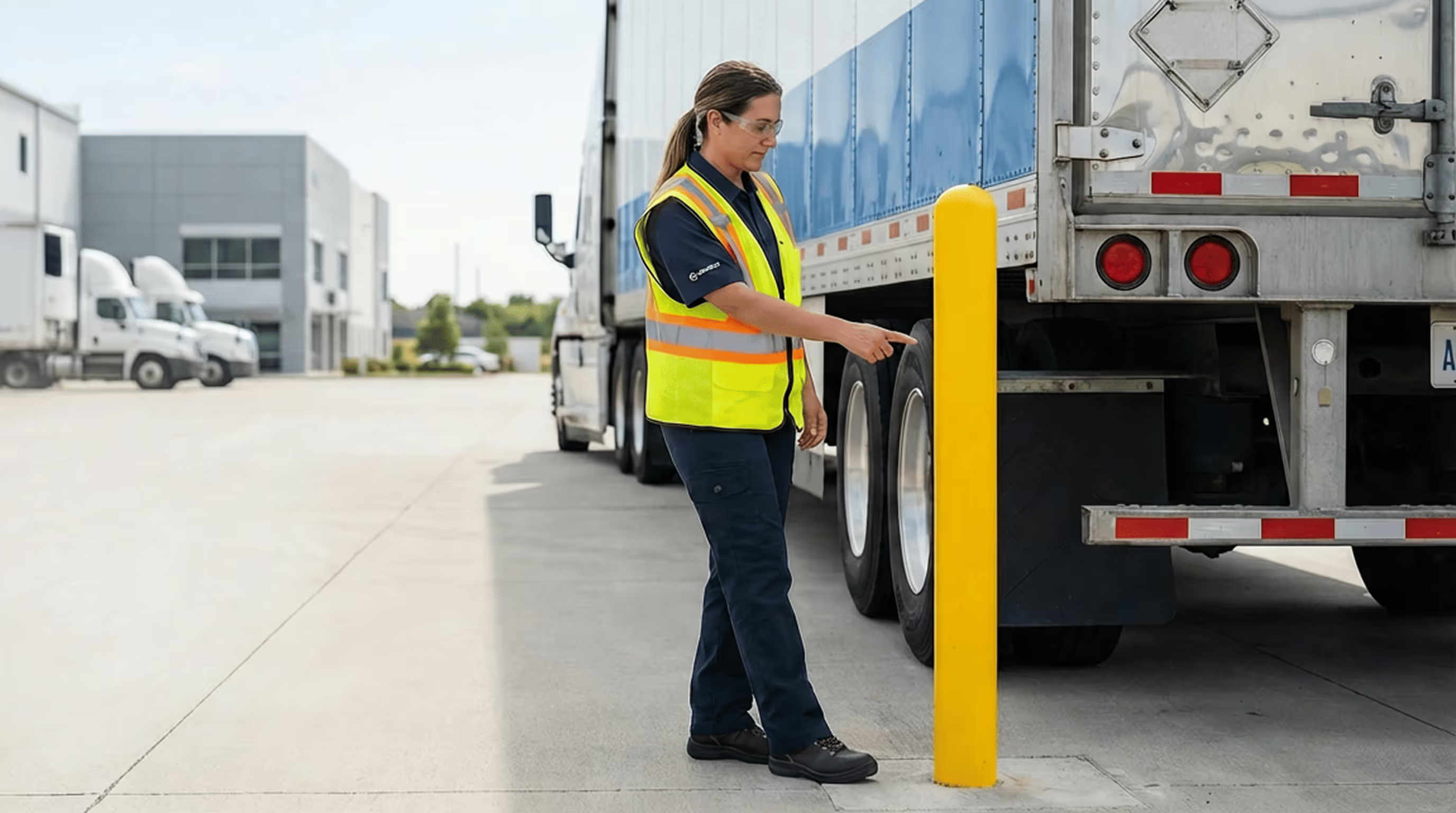
Tires and wheels: Tread depth below minimums, sidewall damage, underinflation, and missing or loose lug nuts. Treat tires as an uptime program. Make it easy — and rewarded — for drivers to report issues before they become OOS events.
Lights and conspicuity: The classic "it was fine yesterday" failure. Add a 60-second light loop to every yard exit and fuel stop. It takes less time than a coffee.
A Practical Roadcheck Prep Plan (built on audits, not hope)
You do not need a 90-day overhaul. You need a focused sprint with leading indicators — metrics you can watch move before an inspector ever shows up.
Week 1: Equipment risk audit (DVIR + maintenance trend)
Start with the units most likely to go OOS: open DVIR items, repeat brake/tire/light work orders, and anything that has been “fine for now” more than once. Pull that list, fix what’s fixable, and document it. If you can’t fix a unit quickly, sideline it intentionally — that’s still proactive.
Week 2: Pre-trip audits (make the walk-around measurable)
Instead of telling drivers to “do better pre-trips,” run structured pre-trip audits for 10 working days. Have a supervisor or lead driver observe a real pre-trip and score it against a short checklist (brakes, tires, lights, conspicuity, and any securement items). Track pass rate by terminal and by driver group, then coach the patterns.
Days before Roadcheck: Tighten your HOS/ELD reporting
Do a 15-minute “inspection-ready” refresh that covers document presentation, what the annual focus means in real life, and the handful of HOS behaviors that trigger deeper scrutiny. Then run daily exception reporting: high edit-rate drivers, missing annotations, odd exemption spikes, and log-to-timestamp mismatches.
Day of Roadcheck: Spot-check, document, repeat
Treat the day like a controlled sample. Spot-check pre-trips on the highest-risk units, verify that logs and supporting documents are clean, and capture what you find. The goal isn’t perfection — it’s proof that your program finds issues before an inspector does.
Roadcheck as a Diagnostic, Not Just a Threat
The fleets that dread Roadcheck are the ones using it as a deadline instead of a feedback loop. If your operation runs clean during those 72 hours, it is because your safety program is working the other 362 days a year.
If something does go sideways — a citation, an OOS — treat it as data. Where did the process break down? Was it a maintenance gap, a coaching gap, or a documentation gap? Fix the root cause, not just the symptom.
We Are in Your Corner
At Nirvana, we work with fleet safety managers every day to build programs that hold up under pressure — not just during Roadcheck season, but year-round.
If you want a second set of eyes on your Roadcheck readiness, reach out to your Nirvana Safety Manager. We can help you identify your highest-risk exposure areas, tighten your cargo securement and ELD coaching, and make sure your documentation tells the right story if it ever ends up in front of an inspector — or a jury.
The best inspection outcome is the one where the inspector finds nothing. Let's make sure that is what happens this May.
Want to connect with your Nirvana Safety Manager ahead of Roadcheck? Reach out — we are here to help and remember that Safety is a shared Responsibility.















.avif)