The Nirvana Safety Team regularly speaks with fleets who have had collisions. The most common thing we hear is that a collision was due to a driver error, or there was nothing the driver could have done to prevent it. While it’s true that some incidents are unavoidable, many could have been avoided. In a world riddled with litigation and fingerpointing, it can seem impossible to feel like you are winning when it comes to safety. Unfortunately, safety managers often spend the majority of their time reacting to what has already happened, rather than proactively addressing the root of why it happened in the first place.
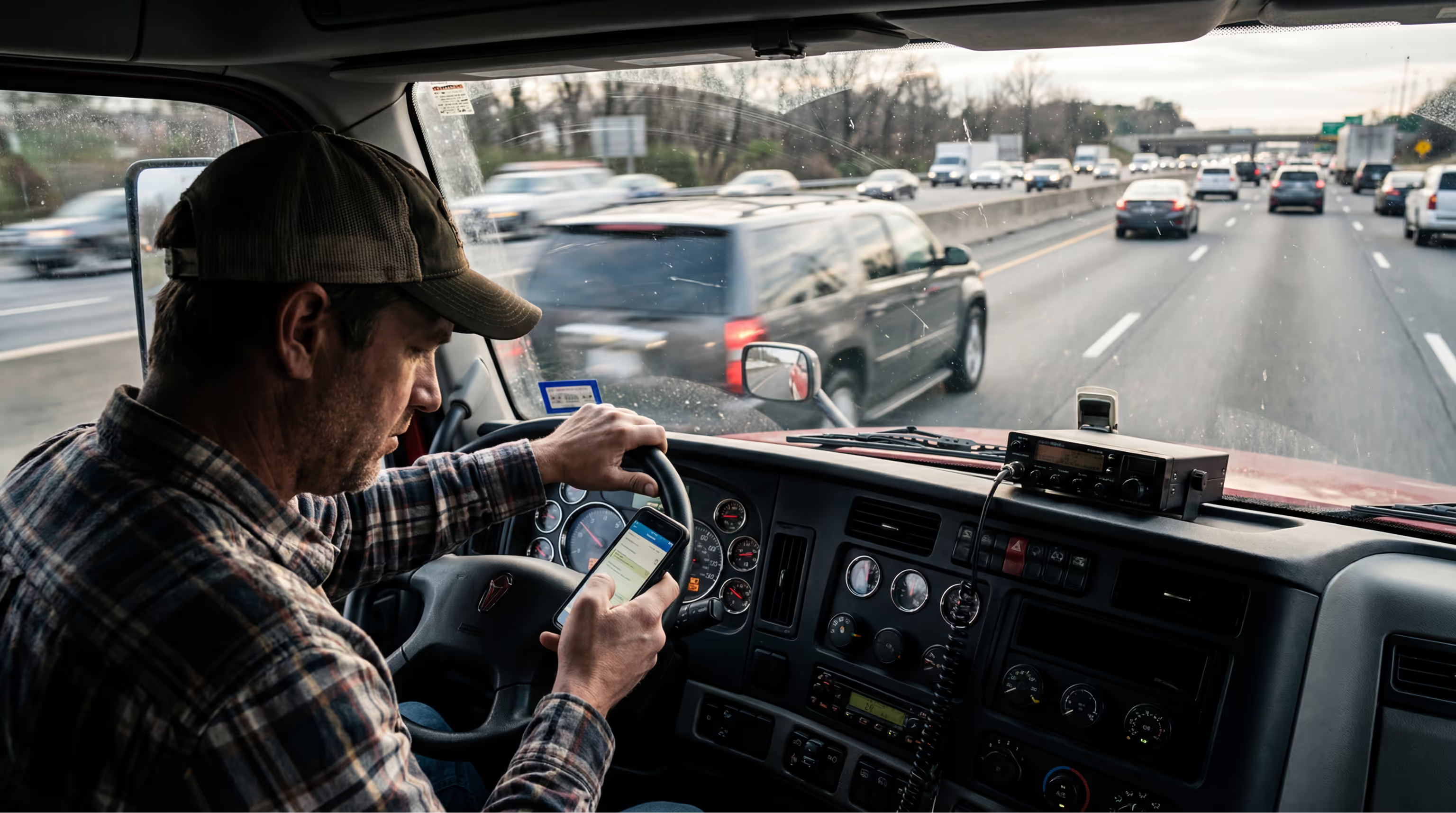
When police officers complete a collision report, they are required to determine not only the most harmful event, but also the first harmful event. These can often be very different. The most harmful event in a two-vehicle collision might be that vehicle 1 (the CMV) rear-ended vehicle 2, leading to the conclusion that the CMV was following too closely. However, the first harmful event could be much further back: the driver of the CMV received a text message and looked at it, which caused them to not see that vehicle 2 was stopping. Only looking at the obvious, most harmful event might lead to training drivers only for maintaining a safe distance, when in reality the root cause would lead to providing distracted driving training.
As a Safety Manager, you have to dig deeper. By digging and asking WHY more times, you eventually get to the ROOT CAUSE of why collisions are happening. Once you make the needed changes, you will have time to be proactive instead of only reactive, protecting your fleet from the "Cycle of Recurrence".
If you find yourself in court, Plaintiff's attorneys are also doing a root cause analysis on the collision. They move backward from the accident scene until they can find a systemic failure within the organization. This is where the numbers start adding up towards a nuclear verdict, as they show the company not only acted negligently but didn’t even look into it or fix it. It is the Safety Manager’s job and responsibility to do that work first.
While fault is determined by law enforcement and insurance adjusters, cause belongs to the safety team. If fault is all that is being solved for, the claim gets paid and everyone moves on. If you solve for cause, you prevent the next accident and the one after that. This distinction matters because most incidents do not happen in isolation—they follow patterns.
A major contributing factor to the industry’s accident rates is the tendency to stop the investigation once "driver error" is identified. When an investigation stops at "the driver failed to stop," the typical response is to discipline the driver. However, if the underlying cause was a maintenance failure, dispatch pressure, or a lack of training, the next driver you hire will face the same trap. This leads to the "Cycle of Recurrence" where the same type of accident occurs repeatedly, draining profitability and morale.
A superficial investigation leaves the "Iceberg of Liability" untouched. While you can see the direct costs (towing, repairs), the hidden costs of ignoring root causes are massive:
- Nuclear Verdicts: Plaintiff attorneys use "Reptile Theory" to prove that a company systematically neglected safety, leading to multi-million dollar judgments.
- Operational Inefficiency: Breakdowns in safety processes often mirror breakdowns in operational efficiency (e.g., late deliveries, fuel waste).
- Insurance Premiums: Recurring accident types signal to underwriters that a fleet is "high risk," driving up rates.
Essential Practices for Effective Root Cause Analysis
To move from reactive to proactive safety management, fleets must implement a rigorous and systematic investigation process:
1. Shift the Culture: Fact-Finding, Not Fault-Finding
Your drivers must understand that an investigation is about improving the system, not just assigning blame. When drivers trust the process, they share the details that save lives.
2. The "4 Ps" of Evidence Collection
Standardize your collection process immediately after a crash:
Position: Photos of the scene, skid marks, and final rest positions.
People: Interviews with the driver, witnesses, and dispatchers (focus on fatigue, distractions, schedule, load pressure).
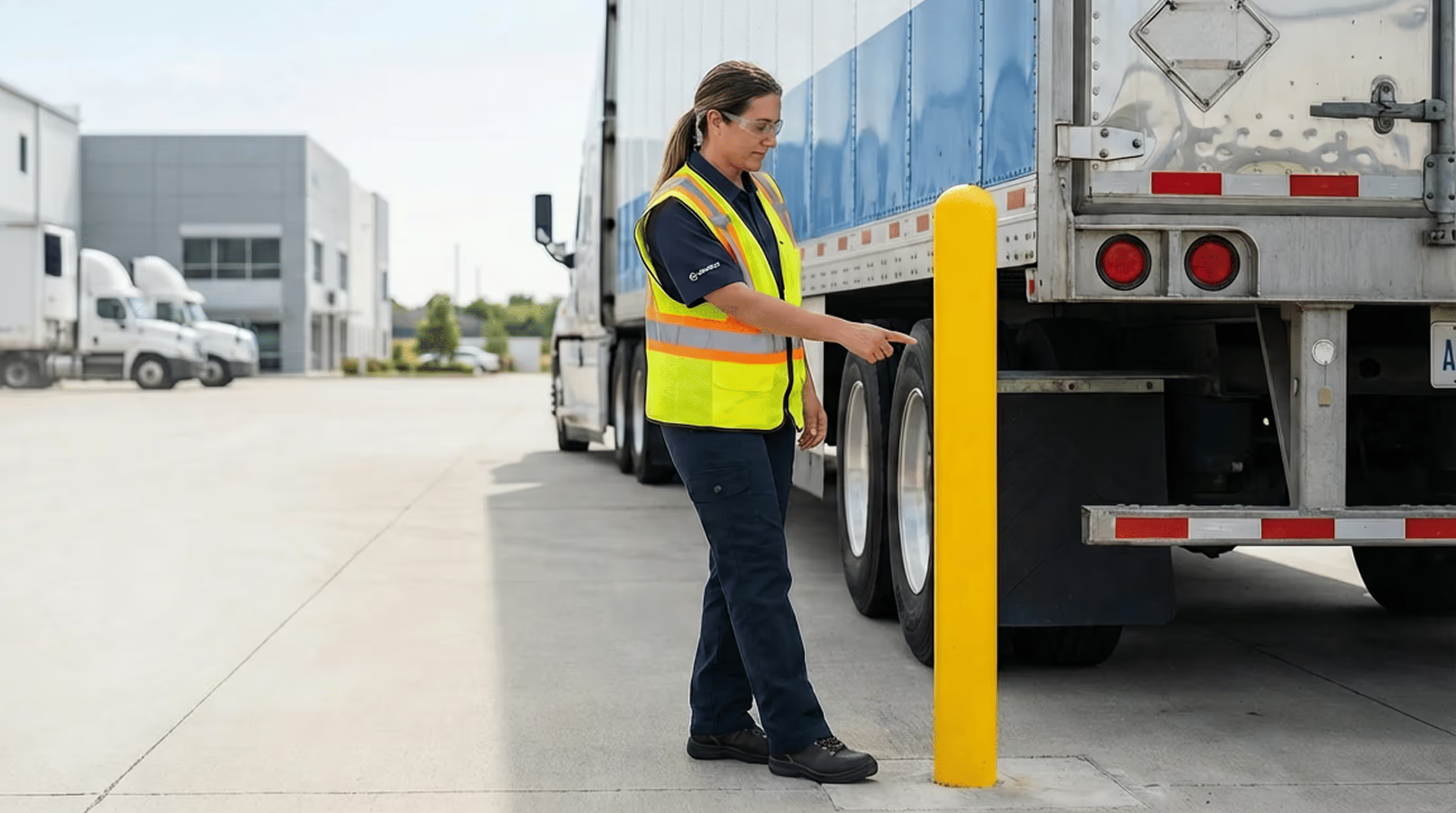
Parts: ECM (black box) downloads, telematics, dash cam footage, and brake/tire measurements.
Paper: Logs, maintenance records, and driver qualification/training files.
3. Use the "5 Whys" Technique
This is the simplest tool for getting past the symptoms of the disease. It involves starting with the direct cause and asking "Why did that happen?" 5 times, until you find a policy or process failure (the root cause).
4. Distinguish "Direct" from "Root" Causes
Direct Cause: The spark (e.g., "Looking at a cell phone while driving").
Root Cause: The fuel (e.g., "Dispatchers communicating to personal devices"). Fixing the spark fixes the individual; fixing the fuel, fixes the fleet.
5. Create SMART Corrective Actions
The investigation isn't done until a change is made. Action items must be Specific, Measurable, Achievable, Relevant, and Time-bound.
An accident report files the event away; a Root Cause Analysis prevents it from coming back. When a safety team asks "why" first and follows it all the way to the root, they protect drivers, strengthen operations, and reduce exposure long before the courtroom ever comes into view.












.avif)