-1.webp)
The ROI of a Safety Program: What the Data Shows
Most fleet owners know that safety matters. But too many still view their safety program as a line-item expense — a cost of doing business rather than a driver of business performance. The data says otherwise. Fleets that invest intentionally in structured safety programs consistently outperform those that don't, not just on the road, but on their balance sheets.
Here's what the numbers actually show — and why every dollar you put into safety has a measurable downstream impact on your total cost of risk.
Safety Programs Reduce Claim Frequency and Severity
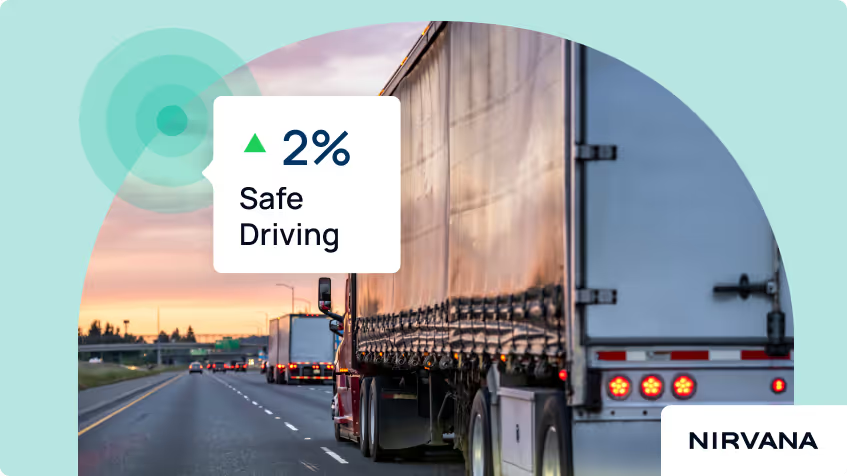
The connection between proactive safety investment and claim performance is well-documented. Fleets that implement formal driver training, regular vehicle inspections, telematics monitoring, and structured safety coaching see fewer accidents per million miles driven.
Fewer accidents mean fewer claims. Fewer claims mean lower loss ratios. And lower loss ratios mean you're a more attractive risk to underwriters at renewal — which translates directly to more stable, and in many cases lower, insurance costs over time.
The severity side matters just as much as frequency. Fleets with strong safety cultures tend to catch hazardous conditions earlier — through pre-trip inspections and telematics alerts — which means the incidents that do occur are often less catastrophic. A minor fender bender is orders of magnitude less costly than a rollover or a rear-end collision at highway speed.
The Compounding Benefits of a Safety Investment
The ROI of a safety program extends well beyond claim counts. When you build a structured safety operation, you're also addressing several compounding risk factors at once:
- Reduced litigation exposure: Documented safety programs — with signed policies, coaching records, and telematics data — are your best defense when a claim escalates to litigation. Fleets with strong documentation are significantly better positioned to avoid nuclear verdicts.
- Lower driver turnover: Drivers want to work for companies that invest in their well-being. A visible commitment to safety culture improves retention, which reduces the recruiting and training costs that come with high turnover.
- Fewer out-of-service violations: Regular inspections and maintenance programs keep vehicles compliant, reducing the risk of roadside violations that pull trucks out of service and disrupt operations.
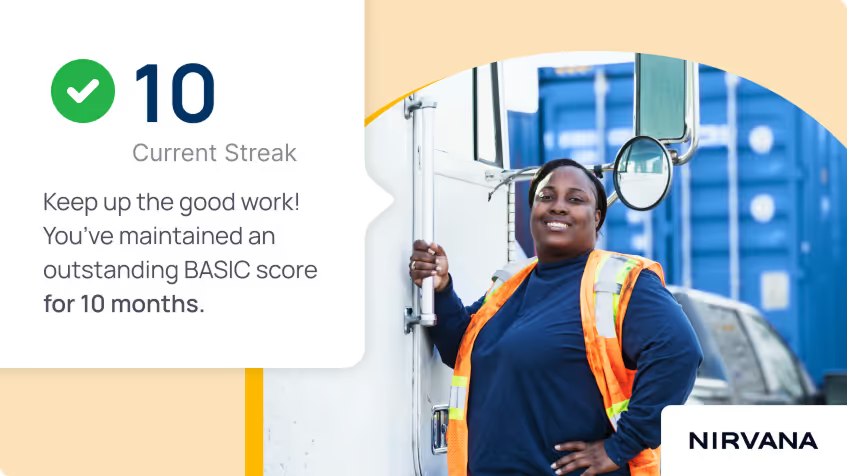
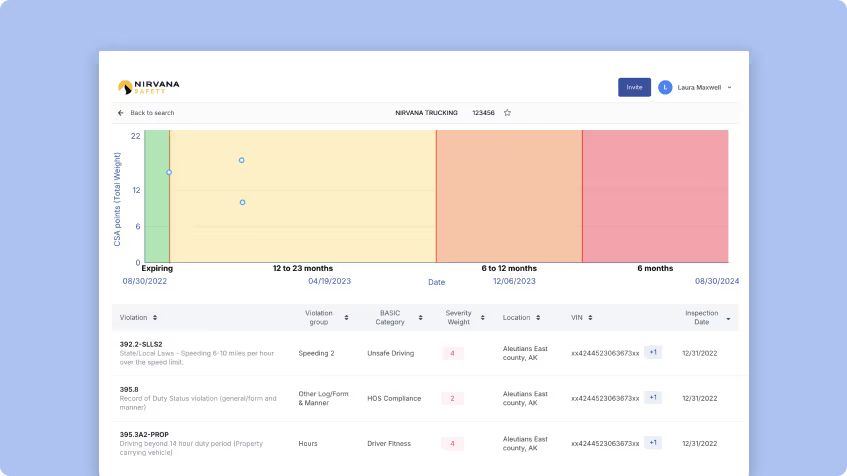
- Stronger CSA scores: Fewer violations and accidents improve your Compliance, Safety, Accountability (CSA) BASIC scores — making your fleet more attractive to shippers, brokers, and underwriters alike.
Each of these benefits reinforces the others. Stronger CSA scores reduce your exposure. Lower turnover means more experienced drivers. Better documentation limits litigation risk. It compounds.
What This Looks Like in Practice
Whether you're running five trucks or 200, the core investment areas are the same:
- Driver training: Initial and ongoing training — including distracted driving, HOS compliance, and adverse weather operation — directly reduces behavioral risk.
- Pre-trip and post-trip inspections: Catching a brake issue before it causes a crash is exponentially cheaper than managing the aftermath.
- Telematics monitoring: Real-time behavioral data allows you to coach proactively rather than reactively. Flagging hard braking, speeding, and following distance before an accident happens is the entire point.
- Safety coaching: Individualized, data-driven coaching conversations — framed around support rather than punishment — change behavior. Drivers who feel invested in are more likely to invest back.
A Practical Safety Investment Checklist
If you're evaluating where to start or where to strengthen your program, work through this list:
- [ ] Is there a written, signed distracted driving policy on file for every driver?
- [ ] Are pre-trip and post-trip inspection records being consistently documented and retained?
- [ ] Is telematics data being reviewed on a regular cadence — not just after incidents?
- [ ] Are coaching conversations happening proactively, with records kept?
- [ ] Are CSA BASIC scores being monitored and addressed?
- [ ] Is there a formal progressive discipline process tied to safety policy violations?
- [ ] Are drivers receiving ongoing training, not just onboarding training?
If you have gaps in any of these areas, that's where your ROI opportunity lives.
We're in This With You
At Nirvana Insurance, we work with fleets every day who are making this shift — from viewing safety as overhead to treating it as a strategic investment. Our team provides telematics coaching support, loss control guidance, and proactive outreach designed to help you reduce claims and protect your people.
The math is straightforward: fleets that invest in safety bear fewer losses, carry less litigation risk, and present as better risks at renewal. We're here to help you build the program that gets you there.
Want to talk through your fleet's current safety program or identify where to focus next? Reach out to our Safety team — we'd love to help.












.avif)