Data-Driven Safety: Using Telematics to Ace Operation Safe Driver Week
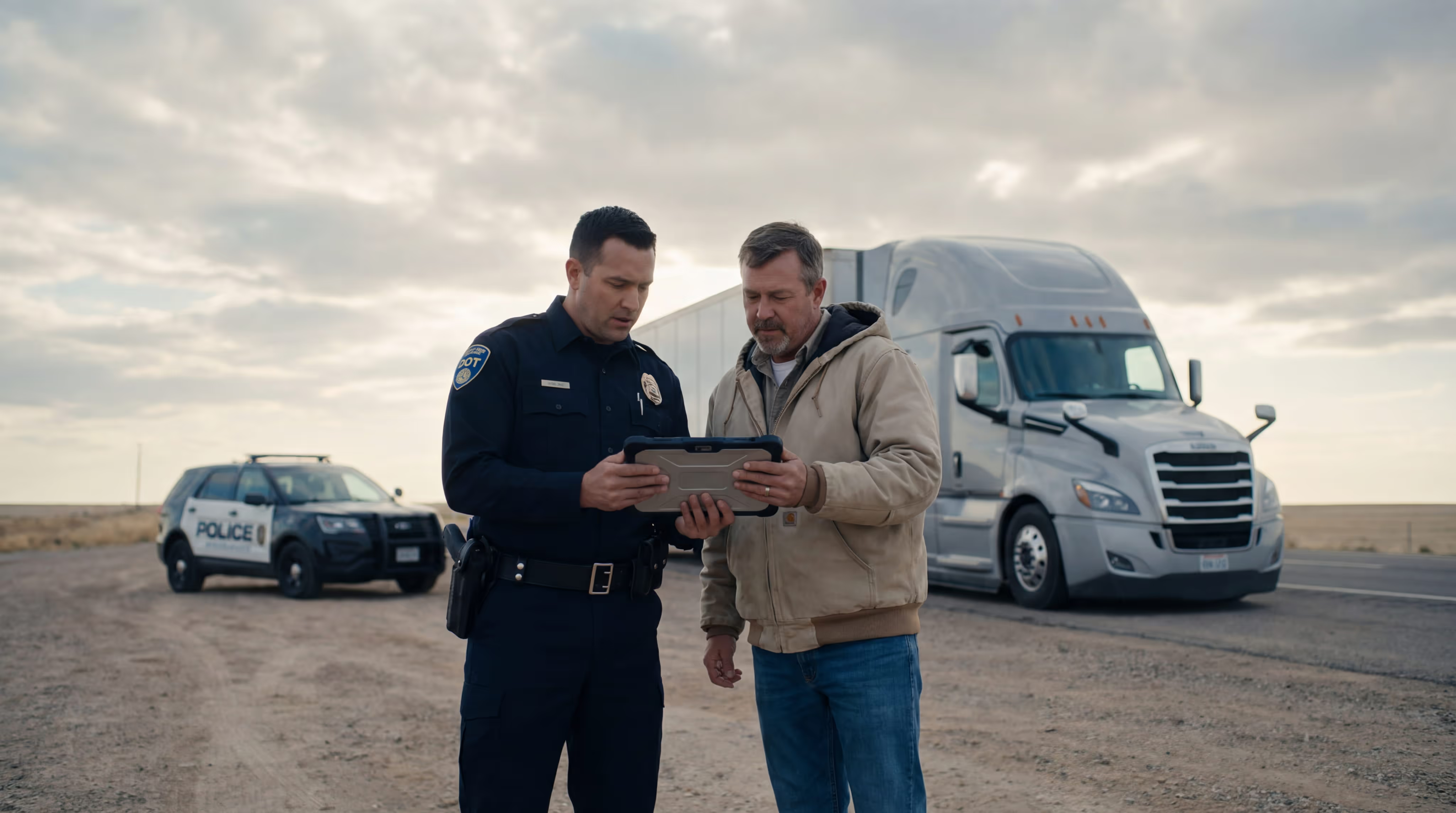
Every July, law enforcement takes to the highways with one clear mission: identify and stop risky drivers before they cause a crash. Operation Safe Driver Week—scheduled for July 12–18, 2026—puts both commercial motor vehicle (CMV) drivers and passenger vehicle drivers under heightened scrutiny. Citations will be issued. Warnings will be given. And your fleet's record will reflect what happens.
The question isn't whether your drivers will be on the road that week. They will. The question is whether they'll be ready.
As someone who has spent 12+ years in fleet safety, I can tell you that the fleets that consistently perform well during enforcement initiatives aren't the ones that scramble in the weeks before. They're the ones that use telematics data year-round to build the habits that matter when the lights start flashing.
What Operation Safe Driver Week Targets
Operation Safe Driver Week is a Commercial Vehicle Safety Alliance (CVSA) initiative designed to reduce high-risk driving behaviors through education, outreach, and traffic enforcement. Law enforcement focuses on the behaviors most likely to contribute to crashes:
- Speeding: Speeding has been a factor in more than a quarter of crash deaths over the past decade.[1] In FMCSA’s Large Truck and Bus Crash Facts 2016, “speeding of any kind” appears among the driver-related factors recorded for large-truck drivers in fatal crashes.[2]
- Distracted driving: Claimed 3,142 lives in 2019.[3]
- Seat belt non-compliance: Among passenger vehicle occupant fatalities in 2019 where restraint use was known, 47% were unrestrained.[4]
- Impaired driving: In 2019, 10,142 people were killed in alcohol-impaired-driving crashes (about one every 52 minutes).[5]
Data consistently shows that traffic stops and law enforcement contact reduce problematic driving behaviors. But the goal for your fleet shouldn't be surviving the week. It should be building a culture where none of these behaviors are occurring in the first place.
How Telematics Gives You the Advantage
If your fleet is running a telematics platform, you already have the tools to prepare your drivers — and to hold them accountable— long before July 12.
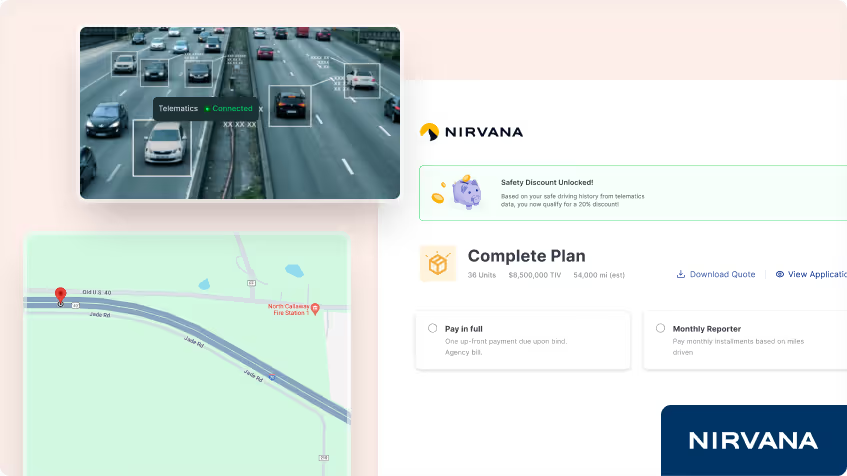
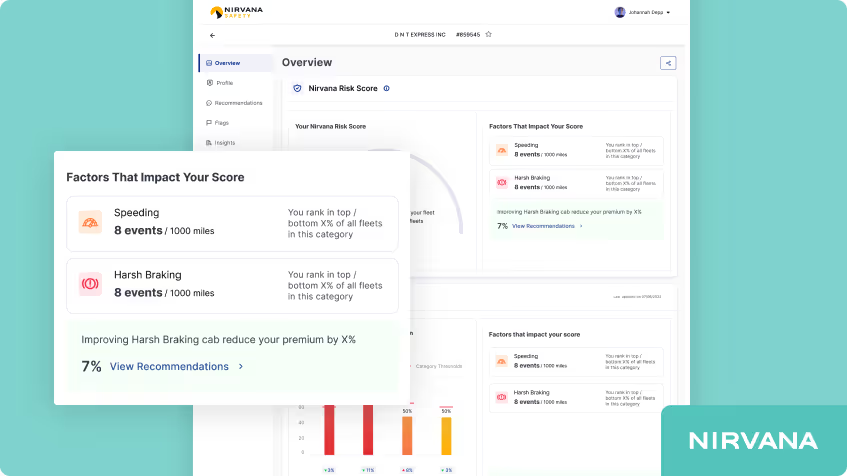
Telematics systems flag the exact behaviors that law enforcement targets during Operation Safe Driver Week: speeding events, hard braking, lane departure, and following distance violations. Every one of those data points is an opportunity to coach a driver before a citation, a crash, or a claim.
Here's how to put that data to work:
- Run a pre-event safety audit. Pull a 30-day report on your top risk drivers. Prioritize those with recurring speeding events or distracted driving flags. Schedule individual coaching conversations before July 12.
- Set speed alert thresholds. Configure your system to flag drivers exceeding posted limits by even five miles per hour. Normalize operating within the speed limit, not just under the enforcement threshold.
- Review seat belt compliance data. Many telematics platforms capture seat belt status. If yours does, use it. Non-compliance isn't just a citation risk—it's a fatality risk.
- Document your coaching. Every conversation, every flag reviewed, every score improvement should be documented. In the event of a future claim or litigation, that paper trail demonstrates a defensible safety culture.
- Recognize improvement. Publicly acknowledge drivers who improve their scores or go an extended period without events. Positive reinforcement shapes behavior as effectively as discipline.
Pre-Event Readiness Checklist
Use this checklist in the weeks leading up to Operation Safe Driver Week:
- Pull 30-day telematics data and identify top-risk drivers
- Schedule individual coaching sessions for drivers with recurring speed or distraction events
- Review and reinforce your written distracted driving policy
- Confirm seat belt compliance expectations are clearly communicated
- Brief dispatchers on realistic scheduling to reduce pressure-driven speeding
- Remind drivers of FMCSA hours-of-service rules and the risks of fatigued driving
- Post Operation Safe Driver Week dates and reminders in driver communications
- Document all pre-event coaching conversations
The Bigger Picture
Operation Safe Driver Week lasts one week. Your safety culture lasts all year.
Fleets that use telematics reactively—only pulling data after an incident—miss the entire value of the technology. The real advantage is in leading indicators: the behaviors you can identify and correct before they become crashes, citations, or catastrophic claims.
At Nirvana, we work directly with fleet safety managers to make the most of the data your fleet is already generating. From telematics coaching support to policy guidance and proactive safety outreach, we're here to help you build a program that performs under scrutiny—whether that's during Operation Safe Driver Week or any other time of year.
Because the best citation is the one your driver never receives. And the best claim is the one that never happens.
Want to talk through your fleet's telematics data or safety program? Reach out to our Safety team—we'd love to help.
Learn more about Operation Safe Driver Week at CVSA.org














.avif)