Brake Safety Week runs Aug. 23–29, 2026 — and this year, CVSA inspectors are zeroing in on brake drum and rotor condition. Cracked rotors, broken drums, metal-to-metal contact, and rust-seized disc brakes are all immediate out-of-service (OOS) violations. If one of your trucks gets tagged, it's not coming back until it's fixed.
The fleets that come through clean aren't guessing. They're using data they already have to make sure the right trucks go to the shop before the inspector ever opens the bay door.
What Inspectors are Looking for This August.
Brake system defects are among the most frequently cited mechanical violations in commercial vehicle inspections. They're a contributing vehicle factor in crashes — not the only one, and not always the dominant one, but one that your maintenance team can directly address before Aug. 23.
This year's enforcement emphasis on drum and rotor condition goes deeper than a standard brake adjustment check. Inspectors are examining the hardware: the physical condition of rotors, drums, and disc components. If your pre-trip inspection process and air brake checks are all you're relying on, that may not be enough to catch what CVSA is looking for this year.
Hard Braking Events Are a Wear Indicator.
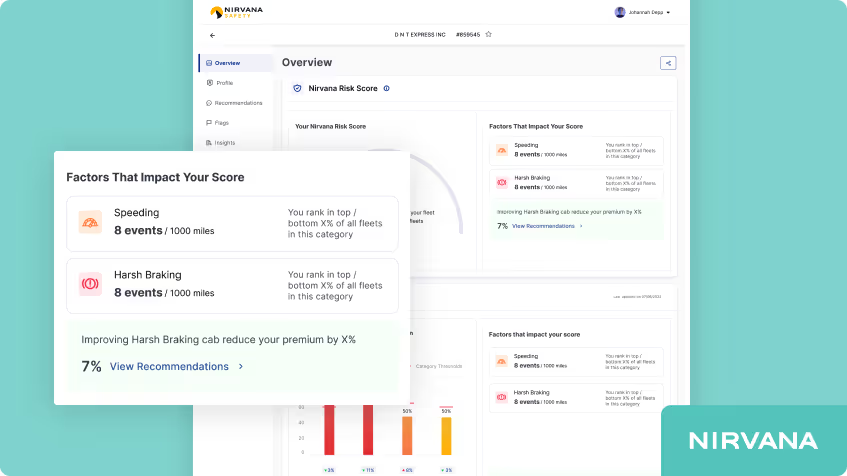
Vehicles that accumulate more frequent, more intense braking events are also accumulating more brake wear — faster than similar units doing similar routes with fewer events.
That wear compounds. A unit logging elevated hard-brake scores month over month isn't just a coaching candidate; it's a truck whose brake components may be closer to the edge than its PM schedule reflects.
That's the lens to apply before Brake Safety Week:
- Flag units trending upward against their own baseline. A truck that's been quiet for months and starts spiking deserves a closer look.
- Use the data to narrow the list, not render a verdict. Hard braking indicates accelerated wear. A mechanic confirms whether that wear has crossed into OOS territory. Your telematics gets the right units in front of your shop team before Aug. 23 — the shop team does the rest.
What Your Drivers Are Telling You.
DVIR entries and driver observations are a different data stream than telematics — and the two shouldn't be confused. But they're a valuable complement.
Drivers notice things telematics doesn't capture: a vehicle that pulls during braking, a pedal that feels different, a grinding noise that wasn't there last week. If those observations are being documented on DVIRs, your maintenance team has an additional layer of signal to work from.
If they're not being documented, that's worth addressing before Brake Safety Week. Inspectors have noted that brake defects — drum and rotor condition in particular — are frequently under-reported on DVIRs. Your drivers are often the first to know something has changed.
Pre-Brake Safety Week Checklist
Run through this before Aug. 23:
- Pull hard braking reports by vehicle for the past 60–90 days. Flag units with elevated scores or an upward trend.
- Cross-reference against PM schedules and last brake inspection date. A truck trending up that's approaching its service interval gets moved to the front of the queue.
- Review prior brake OOS history. Any unit previously cited deserves priority scrutiny this year.
- Brief your drivers on DVIR documentation for drum and rotor condition. Give them specific language for what to note and why it matters.
- Get shop inspections on the calendar now — Early August, not the week of Aug. 23. The maintenance bay shouldn't be the bottleneck.
The Difference Between Reacting and Being Ready
Brake Safety Week isn't the problem. The problem is finding out in a roadside inspection what your data could have told you.
The fleets that consistently perform well during enforcement weeks share a common trait: they treat enforcement deadlines as confirmation that their ongoing process worked, not as the trigger to start one. They pull the data. They get the right trucks inspected. They brief their drivers. And they move on — because they were already doing this.
At Nirvana, we work with fleet safety managers to build that kind of proactive infrastructure — using your telematics data, your PM records, and your driver feedback as a coordinated system, not separate siloed inputs.
We're not just your carrier when a claim happens. We're your partner in the weeks when it counts most.
Ready to build a pre-Brake Safety Week inspection workflow using your fleet's data? Reach out to your Nirvana Safety Manager. We'll work through it with you.












.avif)