Peak freight season puts real pressure on fleets — tighter deadlines, higher volumes, and drivers who want to keep moving. That's exactly when Hours-of-Service regulations matter most, and when violations are most likely to creep in. At Nirvana, we've seen what happens when fatigue gets ahead of compliance. The goal of this post is simple: help your team understand the rules cold, recognize fatigue before it becomes a problem, and build habits that hold up when the pressure is on.
The Core HOS Rules You Need to Know
FMCSA's Hours-of-Service regulations (49 CFR Part 395) exist for one reason — to keep fatigued drivers off the road. Here's a plain-language breakdown of the rules that apply to property-carrying drivers:
- 11-hour driving limit: Drivers may drive a maximum of 11 hours after 10 consecutive hours off duty.
- 14-hour on-duty window: Once a driver comes on duty, they have a 14-hour window in which driving is allowed.
- 30-minute break requirement: After eight cumulative hours of driving time, a driver must take a 30-minute break before continuing.
- 60/70-hour rule: Drivers cannot exceed 60 hours on duty in seven consecutive days, or 70 hours in eight consecutive days. A 34-hour restart resets the cycle.
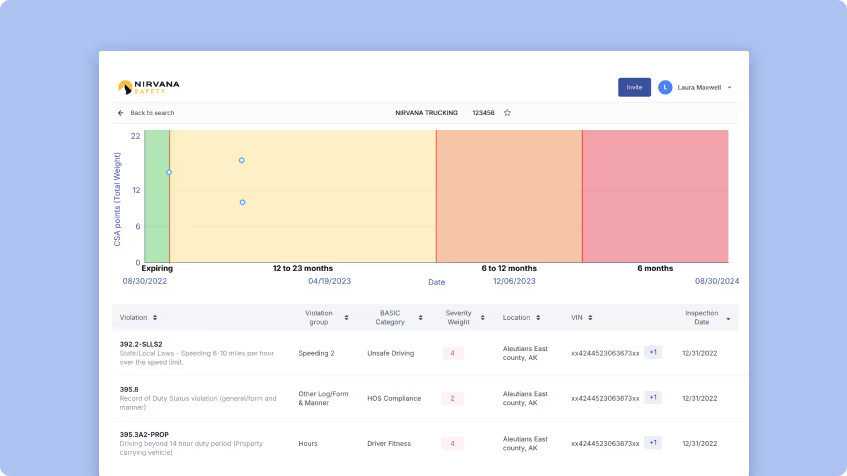
These aren't suggestions. They're federal law, and ELDs enforce them automatically. Violations show up on CSA BASIC scores and can follow a carrier for years.
The Split Sleeper Berth Exception
For long-haul operations, the split sleeper berth rule gives drivers flexibility without sacrificing rest quality. Here's how it works:
- Drivers can split the required 10-hour off-duty period into two segments.
- One segment must be at least seven consecutive hours in the sleeper berth.
- The other must be at least two consecutive hours, either in the sleeper berth or off duty.
- Neither segment counts against the 14-hour window.
This exception is valuable during peak season when drivers need flexibility to rest near delivery windows. Make sure your drivers and dispatchers understand how to apply it correctly — misuse is a common source of violations.
Personal Conveyance: Know the Boundaries
Personal conveyance (PC) allows a driver to move a commercial vehicle for personal reasons while off duty, without the time counting against HOS limits. But it's also one of the most misunderstood and misused provisions in the regulations.
FMCSA guidance is clear: PC is appropriate when the driver is relieved of all duty and moving for personal benefit — not to advance a load or meet a business obligation. Using PC to extend a driver's effective range at the end of a long shift is not compliant and has drawn enforcement attention. Document your company's PC policy in writing and review it with drivers before peak season starts.
How do you handle personal conveyance in your operation? We'd be glad to talk through best practices with your team.
Recognizing Fatigue Before Your ELD Does
Compliance is the floor, not the ceiling. A driver can be fully within HOS limits and still be dangerously fatigued — especially during extended peak-season pushes. Train your drivers to recognize the early warning signs:
- Frequent yawning or heavy eyelids
- Difficulty maintaining lane position
- Missing exits or signs
- Trouble remembering the last several miles
- Microsleep episodes — brief, involuntary moments of nodding off
If any of these show up, the right answer is to pull over safely and rest. Make sure your culture supports that decision. Drivers who feel pressure to push through fatigue are a liability risk — and a safety risk to everyone on the road.
Practical Steps for Peak Season Readiness
Here's a short checklist to run through before freight volume peaks:
- Review HOS rules with all drivers — including split sleeper berth and PC policies — in a team safety meeting.
- Confirm all ELDs are functioning correctly and drivers know how to document exemptions properly.
- Audit your dispatch scheduling. Are routes and timelines realistic within HOS limits?
- Remind dispatchers that it is never acceptable to pressure drivers to violate HOS regulations.
- Set clear expectations: safety takes priority over delivery deadlines, every time.
- Review your last 90 days of CSA data. If HOS violations are trending up, address the root cause now — not mid-season.
We're Your Partner in Peak Season Safety
At Nirvana Insurance, we work with fleet safety managers year-round — not just when a claim comes in. If you're heading into peak season and want a fresh set of eyes on your HOS compliance program, driver scheduling, or safety culture, our team is here to help.
The best claim is the one that never happens. Let's make sure this season is your safest one yet.